 Image 1 of 1
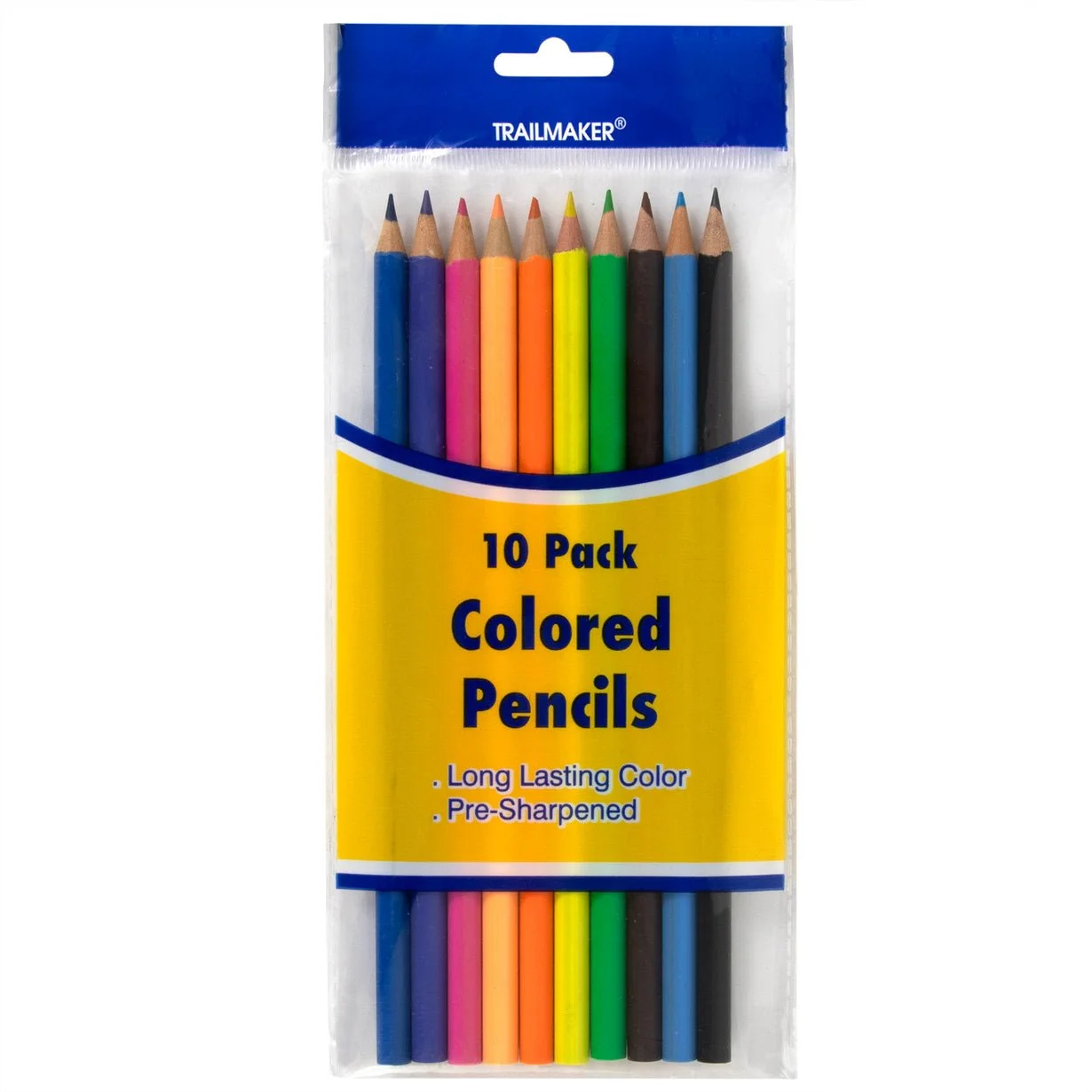
Colored Pencils 10-Pack
Colored Pencils
Bold, bright, and endlessly versatile — colored pencils are the quiet powerhouse of artistic expression. Whether you’re sketching a quick study, layering rich color on heavy paper, or adding fine details to mixed-media work, a quality set of colored pencils opens up a world of texture, depth, and mood.
Why colored pencils matter
Precision and control: The fine point lets you render hair, highlights, and tiny patterns with surgical accuracy.
Layering and blending: Build luminous color by overlaying transparent strokes; burnish with a white or colorless pencil to achieve a polished finish.
Portability: No mess, simple setup. Perfect for plein air work, travel, or sketchbook practice.
Longevity and archival options: Artist-grade pencils use high-quality pigments and binders for fade resistance and durability.
Types to know
Wax-based: Smooth, creamy, and blendable. Popular brands use wax binders that allow vibrant layering but can produce wax bloom (a benign, removable whitish sheen).
Oil-based: Denser, less prone to bloom, and better for crisp, intense color. They often feel firmer and allow strong burnishing.
Water-soluble (watercolor pencils): Use dry like regular pencils and transform with water for painterly washes and soft gradients.
Paper and tools
Paper weight: Choose heavier paper (140 lb / 300 gsm or higher) for extensive layering or wet techniques.
Tooth/texture: Medium tooth holds layers; smooth Bristol is ideal for fine detail.
Blending tools: Stumps, tortillons, and blending pencils help soften edges. Solvents (odorless mineral spirit) can create oil-paint–like blends.
Erasers: Kneaded erasers lift pigment gently; precision erasers are great for highlights.
Sharpeners: Use a high-quality sharpener or craft knife to maintain a clean point without breaking the core.
Techniques that elevate
Hatching and cross-hatching: Build value and subtle color shifts with layered strokes.
Burnishing: Press hard with a light or colorless pencil to fuse layers into a glossy surface.
Scumbling: Use circular, light strokes for soft texture and transitions.
Underpainting: Lay a complementary base to enrich final hues and create depth.
Scoring and lifting: Scratch into layers for hair or fur textures; lift pigment to create highlights.
Color selection tips
Start with a set of 24-36 pencils to cover essential hues; expand to 72+ for professional work.
Invest in a few artist-grade core hues: true red, ultramarine, cobalt, phthalo green, burnt sienna, and a warm and cool yellow.
Use complementary colors to deepen shadows instead of just black — it keeps color alive and prevents flatness.
Maintenance and storage
Keep pencils capped or in a pencil roll to protect points.
Store horizontally to prevent cores from breaking.
Clean sharpeners regularly to avoid metal shavings that can damage cores.
Project ideas
Botanical studies: Layer translucent greens and fine veining to capture leaves and petals.
Portrait details: Focused mini-portraits build expertise in skin tones, hair, and eyes.
Urban sketching: Capture architecture and street scenes with swift, confident strokes.
Mixed media: Combine colored pencils with markers, ink, or watercolor for contrast and richness.
Final note Colored pencils reward patience and precision. They’re a tool for artists who want control without compromise — whether you crave luminous realism or bold, graphic color. Pick a few quality pencils, practice key techniques, and let the color do the rest.
Colored Pencils
Bold, bright, and endlessly versatile — colored pencils are the quiet powerhouse of artistic expression. Whether you’re sketching a quick study, layering rich color on heavy paper, or adding fine details to mixed-media work, a quality set of colored pencils opens up a world of texture, depth, and mood.
Why colored pencils matter
Precision and control: The fine point lets you render hair, highlights, and tiny patterns with surgical accuracy.
Layering and blending: Build luminous color by overlaying transparent strokes; burnish with a white or colorless pencil to achieve a polished finish.
Portability: No mess, simple setup. Perfect for plein air work, travel, or sketchbook practice.
Longevity and archival options: Artist-grade pencils use high-quality pigments and binders for fade resistance and durability.
Types to know
Wax-based: Smooth, creamy, and blendable. Popular brands use wax binders that allow vibrant layering but can produce wax bloom (a benign, removable whitish sheen).
Oil-based: Denser, less prone to bloom, and better for crisp, intense color. They often feel firmer and allow strong burnishing.
Water-soluble (watercolor pencils): Use dry like regular pencils and transform with water for painterly washes and soft gradients.
Paper and tools
Paper weight: Choose heavier paper (140 lb / 300 gsm or higher) for extensive layering or wet techniques.
Tooth/texture: Medium tooth holds layers; smooth Bristol is ideal for fine detail.
Blending tools: Stumps, tortillons, and blending pencils help soften edges. Solvents (odorless mineral spirit) can create oil-paint–like blends.
Erasers: Kneaded erasers lift pigment gently; precision erasers are great for highlights.
Sharpeners: Use a high-quality sharpener or craft knife to maintain a clean point without breaking the core.
Techniques that elevate
Hatching and cross-hatching: Build value and subtle color shifts with layered strokes.
Burnishing: Press hard with a light or colorless pencil to fuse layers into a glossy surface.
Scumbling: Use circular, light strokes for soft texture and transitions.
Underpainting: Lay a complementary base to enrich final hues and create depth.
Scoring and lifting: Scratch into layers for hair or fur textures; lift pigment to create highlights.
Color selection tips
Start with a set of 24-36 pencils to cover essential hues; expand to 72+ for professional work.
Invest in a few artist-grade core hues: true red, ultramarine, cobalt, phthalo green, burnt sienna, and a warm and cool yellow.
Use complementary colors to deepen shadows instead of just black — it keeps color alive and prevents flatness.
Maintenance and storage
Keep pencils capped or in a pencil roll to protect points.
Store horizontally to prevent cores from breaking.
Clean sharpeners regularly to avoid metal shavings that can damage cores.
Project ideas
Botanical studies: Layer translucent greens and fine veining to capture leaves and petals.
Portrait details: Focused mini-portraits build expertise in skin tones, hair, and eyes.
Urban sketching: Capture architecture and street scenes with swift, confident strokes.
Mixed media: Combine colored pencils with markers, ink, or watercolor for contrast and richness.
Final note Colored pencils reward patience and precision. They’re a tool for artists who want control without compromise — whether you crave luminous realism or bold, graphic color. Pick a few quality pencils, practice key techniques, and let the color do the rest.