 Image 1 of 1
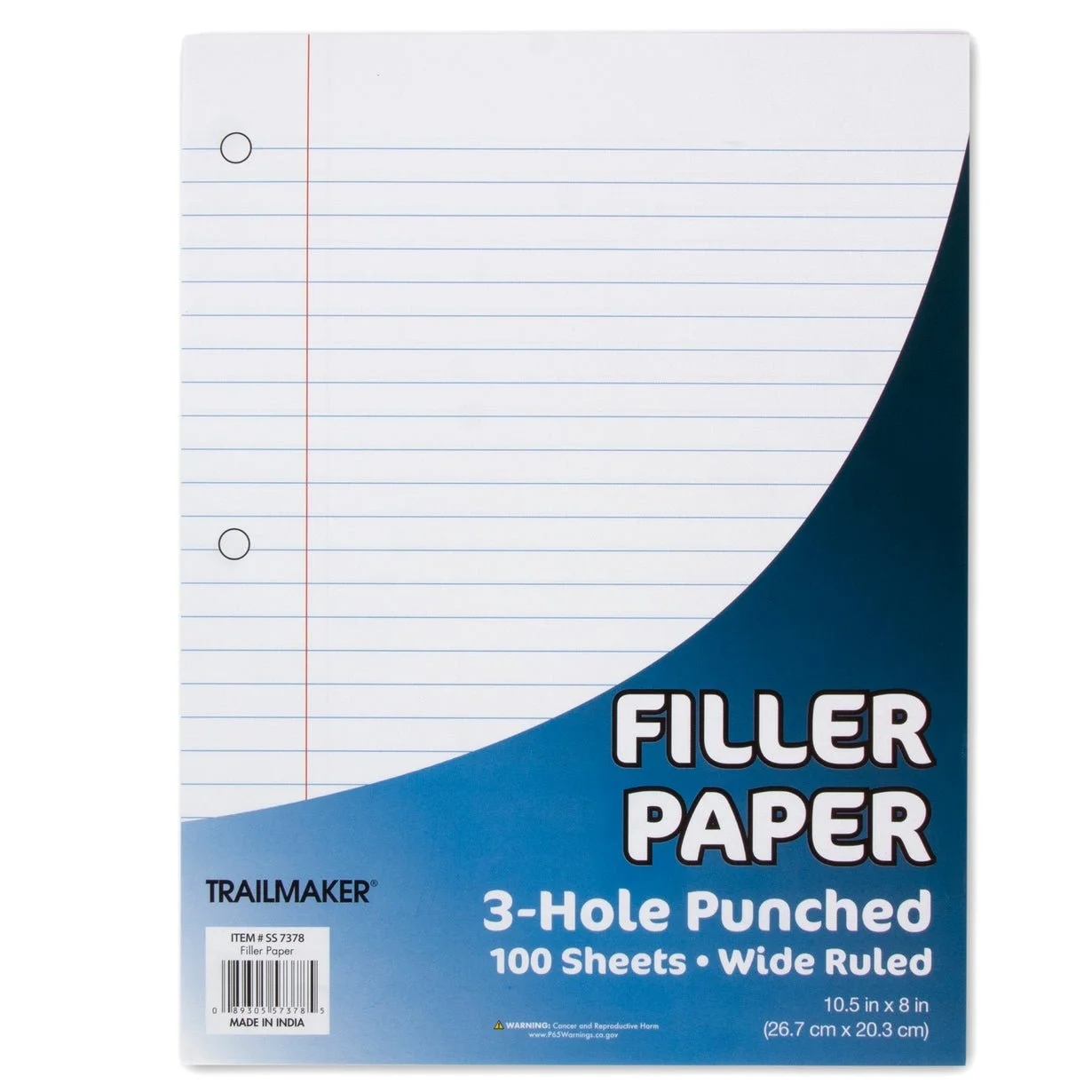
FILLER PAPER
Title: The Unfussy Need for Filler Paper
Introduction Filler paper — the plain, perforated, ruled sheets that live in binders and backpacks — is a humble essential. It does what it’s meant to do: accept ink, hold notes, resist tears (mostly), and provide order. This paper is straightforward, reliable, and ready when you are.
Specifications
Size: Standard 8.5 x 11 inches (letter)
Ruling: Wide-ruled (approx. 11/32" spacing) or college-ruled (approx. 9/32" spacing)
Margins: Left margin reinforced or standard 1.25" margin
Holes: 3-hole punched for standard binders
Weight: Typically 20 lb (75–80 gsm) for everyday use
Finish: Smooth, low-bleed surface suitable for pens, pencils, and most markers
Packaging: Reams, pads, or loose bundles
Uses
School notes: Quick capture of lectures, formulas, and study outlines
Office work: Meeting notes, to-do lists, brainstorming sessions
Personal organization: Budgeting, meal plans, habit trackers
Creative sketching: Rough layouts, storyboards, lyric and idea dumps
Drafting: Handwritten drafts before digital transcription
Advantages
Affordability: Low cost per sheet makes it disposable and replaceable
Flexibility: Compatible with most writing instruments and binders
Accessibility: Easy to acquire and simple to store
Tangibility: Physical writing supports memory and focus in many people
Limitations
Durability: Thin paper can tear, wrinkle, or bleed through
Environmental impact: Standard paper contributes to resource use unless recycled content is chosen
Aesthetic: Plain design lacks the flair of specialty stationery
Care and Best Practices
Use a reinforced margin or plastic-backed sheets for longevity in binders.
Store in a dry, flat place to avoid warping and moisture damage.
Use a blotter or thicker backing when writing with heavy ink pens to reduce bleed-through.
Consider recycled or higher-weight options for archival notes or long-term use.
Alternatives
Loose-leaf cardstock for durability
Notebooks with sewn bindings for permanence
Digital note apps for searchable, cloud-backed records
Specialty paper (graph, dotted, grid) for technical or design work
Conclusion Filler paper is uncomplicated but purposeful. It’s the workhorse of note-taking — unglamorous, dependable, and ready to record the next idea. Choose the weight and ruling that match your handwriting and use it without hesitation.
FILLER PAPER
Title: The Unfussy Need for Filler Paper
Introduction Filler paper — the plain, perforated, ruled sheets that live in binders and backpacks — is a humble essential. It does what it’s meant to do: accept ink, hold notes, resist tears (mostly), and provide order. This paper is straightforward, reliable, and ready when you are.
Specifications
Size: Standard 8.5 x 11 inches (letter)
Ruling: Wide-ruled (approx. 11/32" spacing) or college-ruled (approx. 9/32" spacing)
Margins: Left margin reinforced or standard 1.25" margin
Holes: 3-hole punched for standard binders
Weight: Typically 20 lb (75–80 gsm) for everyday use
Finish: Smooth, low-bleed surface suitable for pens, pencils, and most markers
Packaging: Reams, pads, or loose bundles
Uses
School notes: Quick capture of lectures, formulas, and study outlines
Office work: Meeting notes, to-do lists, brainstorming sessions
Personal organization: Budgeting, meal plans, habit trackers
Creative sketching: Rough layouts, storyboards, lyric and idea dumps
Drafting: Handwritten drafts before digital transcription
Advantages
Affordability: Low cost per sheet makes it disposable and replaceable
Flexibility: Compatible with most writing instruments and binders
Accessibility: Easy to acquire and simple to store
Tangibility: Physical writing supports memory and focus in many people
Limitations
Durability: Thin paper can tear, wrinkle, or bleed through
Environmental impact: Standard paper contributes to resource use unless recycled content is chosen
Aesthetic: Plain design lacks the flair of specialty stationery
Care and Best Practices
Use a reinforced margin or plastic-backed sheets for longevity in binders.
Store in a dry, flat place to avoid warping and moisture damage.
Use a blotter or thicker backing when writing with heavy ink pens to reduce bleed-through.
Consider recycled or higher-weight options for archival notes or long-term use.
Alternatives
Loose-leaf cardstock for durability
Notebooks with sewn bindings for permanence
Digital note apps for searchable, cloud-backed records
Specialty paper (graph, dotted, grid) for technical or design work
Conclusion Filler paper is uncomplicated but purposeful. It’s the workhorse of note-taking — unglamorous, dependable, and ready to record the next idea. Choose the weight and ruling that match your handwriting and use it without hesitation.