 Image 1 of 1
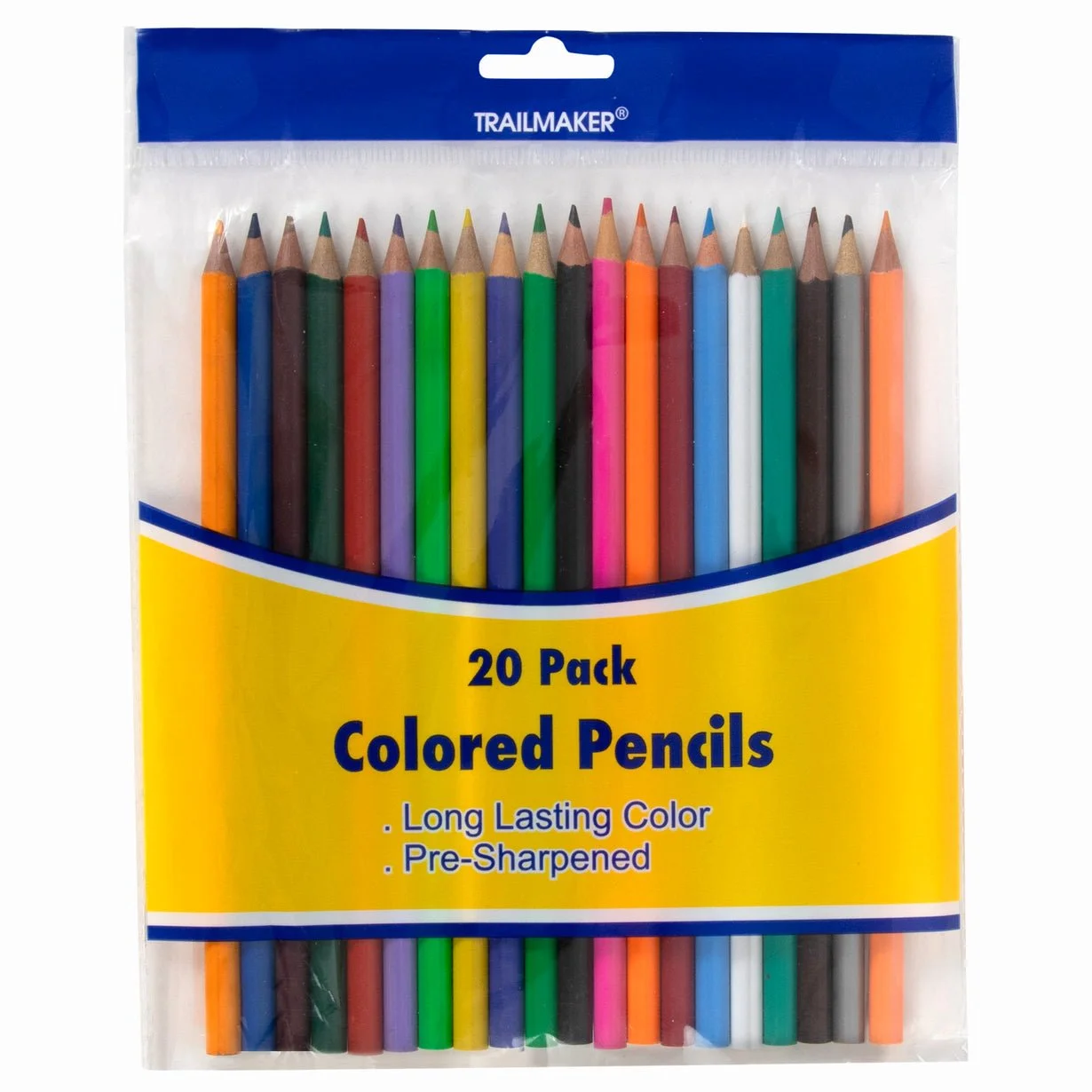
Colored Pencils 20-Pack
Colored Pencils
Bold color, precise control, and a tactile connection between imagination and paper—colored pencils are the artist’s tool for quiet precision and explosive vibrancy. Whether you’re sketching, layering-rich portraits, or adding accents to mixed media, colored pencils deliver clarity and versatility.
Why colored pencils matter
Control: Fine points let you render hair, eyelashes, and intricate textures with cinematic detail.
Layering: Build depth and luminosity by glazing thin layers; you can create velvety shadows, glowing skin tones, and seamless gradients.
Portability: No brush water or drying time—perfect for travel, plein air studies, or a quick color session.
Longevity: High-quality pigments and lightfast formulas keep work vivid for decades when paired with archival paper and fixative.
Types and cores
Wax-based: Smooth, creamy, and blendable. Great for vibrant layers and burnishing to a polished finish. Be mindful of wax bloom—light, removable haze that can appear over time.
Oil-based: Less wax bloom, firmer core, and often richer pigment laydown. They hold a point longer and cut through textured paper better.
Water-soluble: Function as both dry pencils and watercolor when activated with water. Ideal for experimental washes and mixed techniques.
Choosing pencils
Pigment and lightfastness: Look for brands that publish lightfastness ratings; for works meant to last, choose higher-rated pigments.
Core hardness: Softer cores lay down more pigment and blend well; harder cores keep a precise tip and are better for detailed line work.
Range and sets: Wide color ranges with subtle hue variations (warm vs. cool) make blending and realistic rendering much easier.
Ergonomics: Triangular barrels reduce rolling and hand strain; thicker barrels can be more comfortable for long sessions.
Paper and support
Tooth matters: Medium-tooth paper (surface texture) grips pigment and allows multiple layers. Hot-pressed (smooth) supports fine detail; cold-pressed or textured paper gives tactile effects.
Weight and archival quality: Heavier paper (150–300 lb or 200–600 gsm) resists buckling with heavy layering or solvent use.
Primed supports: Colored pencil ground or gesso can be used to prepare nontraditional surfaces.
Techniques to try
Layering: Start light and build to dark, letting each layer sit before adding more pressure. Use complementary colors to neutralize tones and enrich shadows.
Burnishing: Apply heavy pressure with a light or colorless pencil to polish layers into a smooth, almost paint-like surface.
Scumbling: Use small circular strokes with varied pressure to create textured color and soft transitions.
Sgraffito: Scratch through a top layer to reveal color beneath—works well on heavily applied wax pencils or with a wax resist.
Solvent blending: A touch of odorless mineral spirits or specialized blending solvent dissolves wax or oil binders to fuse layers and mimic a painterly look.
Mixed media: Combine colored pencils with ink, gouache, watercolor, or pastels for dynamic contrasts.
Care and finishing
Sharpen carefully: Use a quality sharpener or craft knife to prevent breaking cores. For soft cores, warm the pencil slightly before sharpening to reduce crumbling.
Fixatives: Use a workable fixative lightly between layers to preserve mid-progress work; finish with a UV-protective fixative sparingly to reduce wax bloom and protect pigments.
Storage: Store pencils horizontally to prevent uneven wear and breakage.
Project ideas
Botanical studies: Capture translucent petals and complex leaf veining with layered glazing.
Portraits: Achieve lifelike skin by mapping value first, then layering localized warm and cool tones.
Urban sketching: Combine quick line work with vibrant color accents for on-the-spot storytelling.
Greeting cards and lettering: Use colored pencils for crisp, colorful type with subtle shading.
Final note Colored pencils are deceptively simple tools that reward patience and observation. Invest in good pigments, respect paper and lightfastness, and practice techniques—your drawings will gain a depth and intensity that’s unmistakably yours. Be bold: push pigment, mix techniques, and own the mark you make.
Colored Pencils
Bold color, precise control, and a tactile connection between imagination and paper—colored pencils are the artist’s tool for quiet precision and explosive vibrancy. Whether you’re sketching, layering-rich portraits, or adding accents to mixed media, colored pencils deliver clarity and versatility.
Why colored pencils matter
Control: Fine points let you render hair, eyelashes, and intricate textures with cinematic detail.
Layering: Build depth and luminosity by glazing thin layers; you can create velvety shadows, glowing skin tones, and seamless gradients.
Portability: No brush water or drying time—perfect for travel, plein air studies, or a quick color session.
Longevity: High-quality pigments and lightfast formulas keep work vivid for decades when paired with archival paper and fixative.
Types and cores
Wax-based: Smooth, creamy, and blendable. Great for vibrant layers and burnishing to a polished finish. Be mindful of wax bloom—light, removable haze that can appear over time.
Oil-based: Less wax bloom, firmer core, and often richer pigment laydown. They hold a point longer and cut through textured paper better.
Water-soluble: Function as both dry pencils and watercolor when activated with water. Ideal for experimental washes and mixed techniques.
Choosing pencils
Pigment and lightfastness: Look for brands that publish lightfastness ratings; for works meant to last, choose higher-rated pigments.
Core hardness: Softer cores lay down more pigment and blend well; harder cores keep a precise tip and are better for detailed line work.
Range and sets: Wide color ranges with subtle hue variations (warm vs. cool) make blending and realistic rendering much easier.
Ergonomics: Triangular barrels reduce rolling and hand strain; thicker barrels can be more comfortable for long sessions.
Paper and support
Tooth matters: Medium-tooth paper (surface texture) grips pigment and allows multiple layers. Hot-pressed (smooth) supports fine detail; cold-pressed or textured paper gives tactile effects.
Weight and archival quality: Heavier paper (150–300 lb or 200–600 gsm) resists buckling with heavy layering or solvent use.
Primed supports: Colored pencil ground or gesso can be used to prepare nontraditional surfaces.
Techniques to try
Layering: Start light and build to dark, letting each layer sit before adding more pressure. Use complementary colors to neutralize tones and enrich shadows.
Burnishing: Apply heavy pressure with a light or colorless pencil to polish layers into a smooth, almost paint-like surface.
Scumbling: Use small circular strokes with varied pressure to create textured color and soft transitions.
Sgraffito: Scratch through a top layer to reveal color beneath—works well on heavily applied wax pencils or with a wax resist.
Solvent blending: A touch of odorless mineral spirits or specialized blending solvent dissolves wax or oil binders to fuse layers and mimic a painterly look.
Mixed media: Combine colored pencils with ink, gouache, watercolor, or pastels for dynamic contrasts.
Care and finishing
Sharpen carefully: Use a quality sharpener or craft knife to prevent breaking cores. For soft cores, warm the pencil slightly before sharpening to reduce crumbling.
Fixatives: Use a workable fixative lightly between layers to preserve mid-progress work; finish with a UV-protective fixative sparingly to reduce wax bloom and protect pigments.
Storage: Store pencils horizontally to prevent uneven wear and breakage.
Project ideas
Botanical studies: Capture translucent petals and complex leaf veining with layered glazing.
Portraits: Achieve lifelike skin by mapping value first, then layering localized warm and cool tones.
Urban sketching: Combine quick line work with vibrant color accents for on-the-spot storytelling.
Greeting cards and lettering: Use colored pencils for crisp, colorful type with subtle shading.
Final note Colored pencils are deceptively simple tools that reward patience and observation. Invest in good pigments, respect paper and lightfastness, and practice techniques—your drawings will gain a depth and intensity that’s unmistakably yours. Be bold: push pigment, mix techniques, and own the mark you make.