 Image 1 of 1
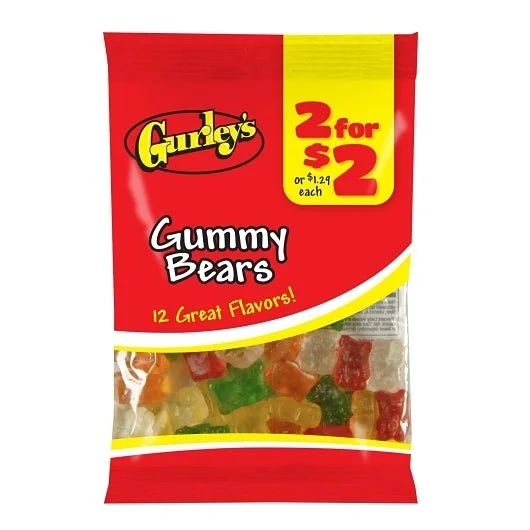
Gummy Bears
Bright, bouncy, and unapologetically joyful — gummy bears are the candy equivalent of a happy dance in your mouth. Little sculpted bears made from sugar, gelatin, and concentrated fruit flavors, they deliver chewy satisfaction in a pocket-sized package. Here’s everything worth celebrating about them.
What makes them great
Texture: The satisfying chew is firm but yielding, with a springy bounce that’s oddly addictive.
Flavor variety: Classic fruit flavors (lemon, orange, raspberry, pineapple, cherry) and modern twists (sour, tropical, cola, even cocktail-inspired) keep taste buds interested.
Portability: No mess, no utensils — just pop a few for an instant mood boost.
Versatility: Snack straight from the bag, mix into trail mix, decorate desserts, or melt into sauces and jellies for creative treats.
Fun uses and ideas
Movie-night mix: Combine gummy bears with popcorn and pretzel sticks for sweet-salty crunch.
Gummy kabobs: Thread bears onto skewers with fruit for kid-friendly party snacks.
Freeze pop-ups: Freeze gummy bears in ice cube trays with fruit juice for cooling, colorful cubes in summer drinks.
Gummy bark: Press gummy bears into melted white chocolate spread on a sheet, chill, and break into shards.
Edible decorations: Use them to top cupcakes, decorate cakes, or add whimsical accents to dessert tables.
Health & substitutions
Traditional gummies use gelatin (animal-derived). For vegetarian/vegan options, look for pectin- or agar-based gums.
Sugar-free varieties use alternative sweeteners; check ingredients for aftertaste or laxative effects if consumed in large amounts.
Portion control: Small size makes overeating easy — try pre-portioning into snack bags.
A quick serving guide
Treat: 5–10 gummy bears for a small sweet fix.
Snack share: 1/2 cup per person for parties or gatherings.
Baking use: Add 1/4 to 1/2 cup to recipes that call for chewy candy mix-ins.
Gummy bear trivia
Invented in 1920 by Hans Riegel in Germany; bears became a global candy icon.
“Haribo Goldbears” helped popularize the shape and brand.
Annual events and social trends celebrate gummy bear art, giant sculptures, and even gummy bear recipes for cocktails and savory pairings.
Bold take Gummy bears are more than candy — they’re tiny, chewy ambassadors of joy. Keep a stash for stubborn mornings, guilty pleasures, or low-cost party magic. Choose your flavor, set the portion, and embrace the simple, unpretentious fun.
Gummy Bears
Bright, bouncy, and unapologetically joyful — gummy bears are the candy equivalent of a happy dance in your mouth. Little sculpted bears made from sugar, gelatin, and concentrated fruit flavors, they deliver chewy satisfaction in a pocket-sized package. Here’s everything worth celebrating about them.
What makes them great
Texture: The satisfying chew is firm but yielding, with a springy bounce that’s oddly addictive.
Flavor variety: Classic fruit flavors (lemon, orange, raspberry, pineapple, cherry) and modern twists (sour, tropical, cola, even cocktail-inspired) keep taste buds interested.
Portability: No mess, no utensils — just pop a few for an instant mood boost.
Versatility: Snack straight from the bag, mix into trail mix, decorate desserts, or melt into sauces and jellies for creative treats.
Fun uses and ideas
Movie-night mix: Combine gummy bears with popcorn and pretzel sticks for sweet-salty crunch.
Gummy kabobs: Thread bears onto skewers with fruit for kid-friendly party snacks.
Freeze pop-ups: Freeze gummy bears in ice cube trays with fruit juice for cooling, colorful cubes in summer drinks.
Gummy bark: Press gummy bears into melted white chocolate spread on a sheet, chill, and break into shards.
Edible decorations: Use them to top cupcakes, decorate cakes, or add whimsical accents to dessert tables.
Health & substitutions
Traditional gummies use gelatin (animal-derived). For vegetarian/vegan options, look for pectin- or agar-based gums.
Sugar-free varieties use alternative sweeteners; check ingredients for aftertaste or laxative effects if consumed in large amounts.
Portion control: Small size makes overeating easy — try pre-portioning into snack bags.
A quick serving guide
Treat: 5–10 gummy bears for a small sweet fix.
Snack share: 1/2 cup per person for parties or gatherings.
Baking use: Add 1/4 to 1/2 cup to recipes that call for chewy candy mix-ins.
Gummy bear trivia
Invented in 1920 by Hans Riegel in Germany; bears became a global candy icon.
“Haribo Goldbears” helped popularize the shape and brand.
Annual events and social trends celebrate gummy bear art, giant sculptures, and even gummy bear recipes for cocktails and savory pairings.
Bold take Gummy bears are more than candy — they’re tiny, chewy ambassadors of joy. Keep a stash for stubborn mornings, guilty pleasures, or low-cost party magic. Choose your flavor, set the portion, and embrace the simple, unpretentious fun.